The 5 Hidden Complexities of Outdoor Pool Camera Design
An outdoor pool looks simple: water, sunshine, and peopleenjoying themselves. But installing an outdoor pool camera system for drowningprevention is one of the most demanding engineering challenges in the field.Unlike indoor pools, where the environment is fixed and controlled, an outdoorpool must contend with constantly changing natural conditions, limited physicalinfrastructure, and unusually high visual coverage requirements.
Here are the five key challenges that shape every outdoorinstallation.
1. The Sun Glare Problem
The biggest enemy of any camera watching water outdoorsisn't rain or wind, it's the sun. Sunlight hitting the water's surface createsglare and visual noise that can completely obscure a swimmer beneath thesurface, right at the moment when that visibility matters most. The angle ofthe sun shifts constantly throughout the day and across seasons, so a setupthat works perfectly in the morning can fail by the afternoon.
Proper design requires thinking about camera placementrelative to the sun's path, using image-correctionalgorithms that compensate for glare and extreme contrast, and sometimescombining multiple camera angles so there's always a clean line of sight to thewater, even when one angle is temporarily blinded by light.
2. The Infrastructure Problem: Wiring a Pool From Scratch
An outdoor pool, unlike an indoor facility, simply doesn'tcome with ready-made infrastructure. Powering cameras, processing units, andnetwork equipment often means running cables through the floor, under outdoortiling and walkways, and sometimes even beneath grass or landscaped areas. Thisrequires tight coordination with contractors, controlled excavation, andprotecting the cables from water, moisture, and extreme temperatures.
Every connection point also has to meet strict safetystandards, since this is inherently a wet environment. That means planningcable routes well before the concrete is poured, which makes the engineeringdesign phase far more critical than it would be for an installation inside anexisting building.
3. The Pole Placement Challenge
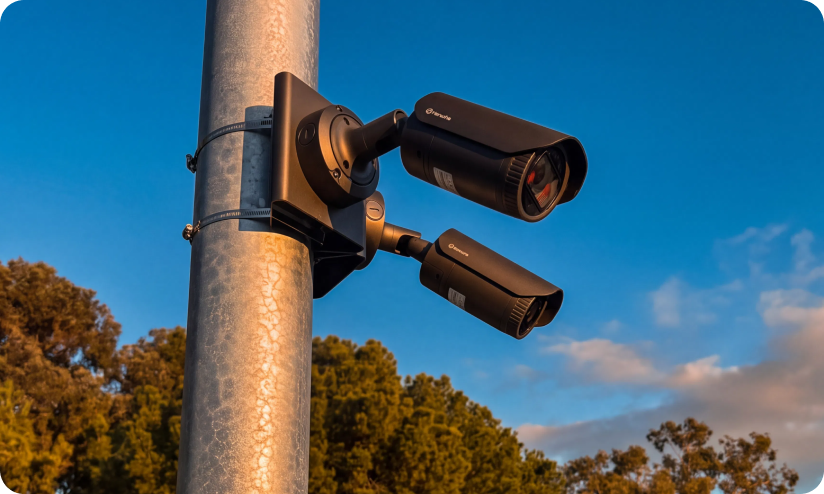
To achieve the right camera angle, tall mounting poles areoften needed around the pool's perimeter. Each pole is both an engineeringchallenge and an aesthetic decision: it needs to withstand strong winds,ongoing corrosion from chlorine exposure (and seawater in some cases), andadditional loads such as lighting or networking equipment.
Pole placement has to balance the need for optimal heightand angle against the physical constraints of the site, walkways, seatingareas, safety regulations, and minimum distance from the pool's edge. Movingeven a single pole can change the entire coverage map of the system.
4. Keeping the Technology Out of Sight
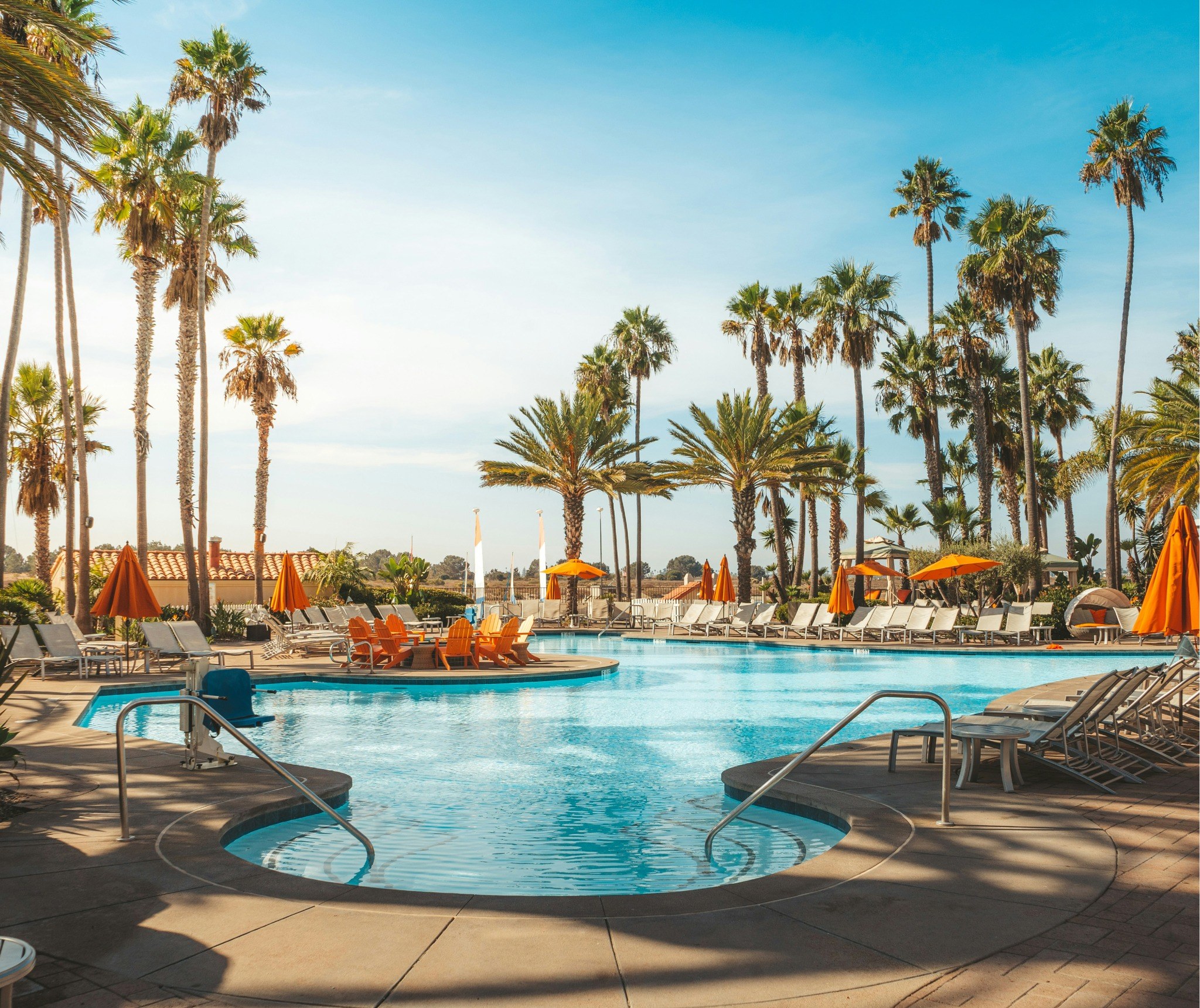
This is perhaps the easiest challenge to overlook: anytechnical solution installed outdoors also becomes part of the pool's visualexperience. Exposed poles, cameras, and cables can detract from the aestheticof a space designed to feel inviting and relaxing. For hotels, resorts, andhigh-end private pools, the look of the facility is part of the product itself.
That's why good design doesn't stop at a functionalsolution, it aims to blend into the environment in a way that doesn't shouttechnology. This includes choosing colors and finishes that merge with thesurroundings, smart placement that keeps equipment out of visitors' sightlines,and close collaboration with architects and landscape designers.
5. Large Lagoon Pools: Why Some Sites Need 15+ Cameras
Large lagoon-style pools, with irregular shapes and varyingsurface areas, present a coverage challenge on an entirely different scale.Instead of a handful of cameras covering a simple rectangle, a single pool mayrequire more than 15 cameras to ensure there isn't a single blind spot, aboveor below the water.
That number of cameras significantly increases complexity atevery layer: designing angles that don't overlap excessively but also leave nogaps, managing power and networking infrastructure at a much larger scale,processing and unifying data from many sources in real time, and maintaining anentire array rather than a single unit. This is a full-scale engineeringproject in its own right, not simply a smaller solution multiplied.
In Summary: Complexity You Don't See, But Always Feel
An outdoor pool may look like a simple, natural environment,but behind every successful monitoring system is meticulous engineering designthat contends with sun, water, infrastructure, aesthetics, and scale, often allat once. Lynxight takes on exactly this challenge: building solutions thatovercome every physical and environmental obstacle, without compromising oncoverage quality, and without detracting from the look and experience ourcustomers want to provide their visitors. That's precisely why designing anoutdoor pool system with us is always a tailored process, one that combinestechnical expertise with a deep understanding of the real needs of each andevery site.
As commercial pool operators face rising pressure tomodernize, outdoor camera design is one piece of a much bigger shift. See our report for the full picture.
.png)